
Responding to Black Lives Matter
LEAD: Jolivia Gaston
Jolivia is a freelance poet, with various volumes and commissions in publication. A former chairperson at Commonword Publishers, she loves performing and promoting poetry, particularly in the fight against racism.
On 25 May 2020, a police officer in Minneapolis, United States, held his knee on George Floyd’s neck for 8mins 46 seconds. His death was witnessed on video and shared throughout the world.
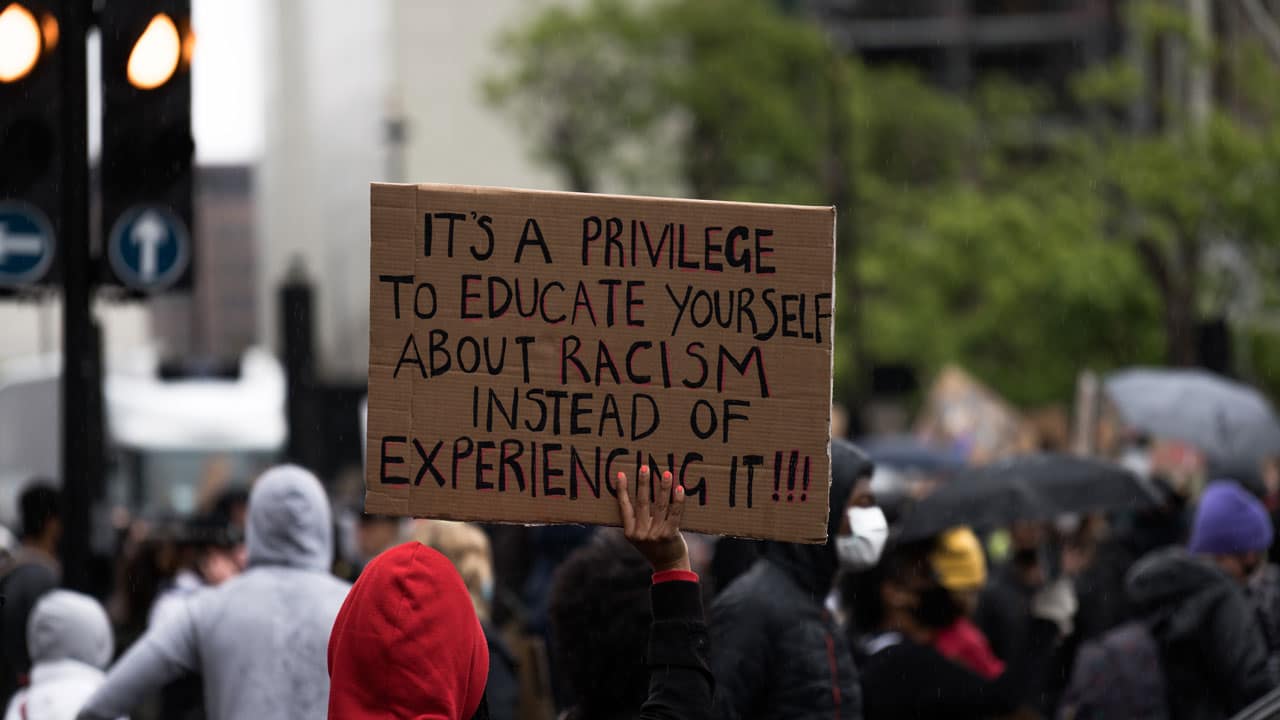
In the wake of such a shocking event, worldwide demonstrations erupted and the powerful slogans #BlackLivesMatter, #ICantBreathe and #NoPeaceNoJustice have become familiar to all.
Though a predominantly white congregation, St James & Emmanuel had always seen itself as a parish that was welcoming to people of colour. However, it was only right to address the issues of discrimination and privilege and examine its own attitudes.
In June, a streamed Sunday service was dedicated to #BlackLivesMatter, including powerful interviews and poetry.
In primary school, I questioned my mother when one of the boys called me a nigger. Also, I couldn’t go to ballet school: ‘No blacks allowed’.
Jolivia Gaston
The church has taken a stand to help address these issues and, as an inclusive church, we come together to uphold and recognise the value of each human being.
What we have learned
Put simply, we have learned to listen and to share, and to face up to the unconscious bias that frames many of our assumptions and views.
Those of us who are people of colour have been encouraged to share our stories and have been greatly encouraged by the willingness of our friends to listen. In this, we can all learn and honour God.
Listening is crucial – so much suffering has gone unnoticed by the majority, but there has been an increase in understanding issues such as white privilege and the difference between being non-racist and anti-racist.
But, with the death of George Floyd and the absence of justice, even now, for the murder of Stephen Lawrence in London as long ago as 1993, racism continues to be deeply embedded in society. Silence will only allow racism to fester within the community, but collectively we can make a difference as we come to terms with the legacy of British imperialism and stamp out the racism that it fostered.
What we are doing
We need to keep on listening to each other and sharing with each other, possibly in community events. We also need to turn words into action.
There is interest in an online forum, where people from church or other organisations can ask questions about black issues in a safe environment. It could also provide information on multicultural events for the whole family, possibly linked to the St James & Emmanuel website.
Frequently asked questions
What is ‘Black Lives Matter’?
The phrase ‘Black Lives Matter’ is used to state that black lives matter as much as any other life.
In 2012, an American teenage black boy, Trayvon Martin, was shot dead by George Zimmerman, a neighbourhood watch volunteer. The following year, Zimmerman was tried and acquitted. The response to the verdict led to demonstrations because black people felt their lives did not have the same value as other people’s lives and #BlackLivesMatter became widely used on social media. Black Lives Matter is now also the name of a campaigning organisation.
The slogan and hashtag has been used again in worldwide protests and on social media following the death of George Floyd in 2020.
What is ‘white privilege’?
The term describes the convenience that white people living in a predominantly white society benefit from – their day-to-day living is unaffected by the colour of their skin. It does not mean that white people do not suffer disadvantage, but simply that they do not suffer it due to the colour of their skin.
Psychologist John Amaechi gives a fuller explanation in a short video for the BBC .
What is the difference between being non-racist and anti-racist?
A non-racist will notice others who hold racist attitudes, but comfort themselves that they are not racist.
An anti-racist will notice others who hold racist attitudes and challenge those views.